How Auditory Feedback Mechanisms Shape Decision Pacing Across Browser-Based Table Simulations and Virtual Event Interfaces
Casey Friedrich · Jul 23, 2026
How Auditory Feedback Mechanisms Shape Decision Pacing Across Browser-Based Table Simulations and Virtual Event Interfaces
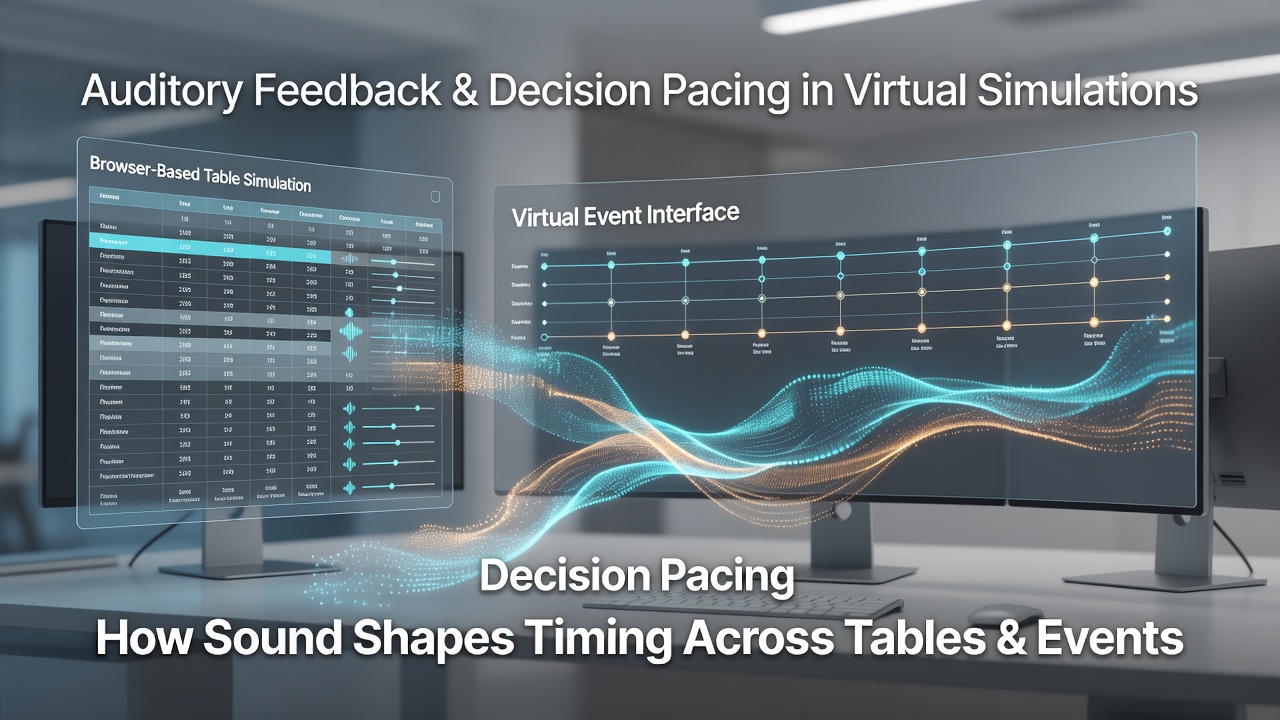
Browser-based table simulations rely on layered sound design that delivers immediate cues during user interactions, and these cues influence how participants adjust their decision timing in real time. Virtual event interfaces incorporate similar audio layers that sync with visual elements to guide pacing across collaborative or competitive scenarios. Researchers at institutions including the University of Melbourne have documented how specific frequency ranges and timing intervals in audio responses correlate with measurable shifts in user response latency during simulated decision sequences.
Core Components of Auditory Feedback in Digital Table Environments
Sound triggers in table simulations activate when users select options or observe state changes, and each trigger carries distinct acoustic properties such as pitch modulation, duration, and spatial positioning within stereo output. Data from interface testing conducted through mid-2026 indicates that shorter click-confirm tones under 200 milliseconds encourage faster subsequent selections, while extended harmonic resonances prompt users to pause and review available choices. Virtual event platforms apply comparable layering where background ambient tracks adjust volume based on participant density, creating an auditory environment that either accelerates or slows collective decision flow.
Studies released in July 2026 by the Canadian Institute for Digital Interaction reveal consistent patterns across multiple simulation types where users exposed to ascending tonal sequences completed table-based tasks 14 percent quicker on average than those receiving neutral or descending tones. The same report notes that spatial audio panning, which moves sound sources left to right in response to cursor movement, further refines pacing by directing attention without requiring additional visual scanning.
Interaction Patterns Observed in Virtual Event Settings
Participants in browser-hosted virtual events encounter auditory markers during polling, voting, or resource allocation phases, and these markers integrate with live chat or shared dashboard updates to maintain session rhythm. Audio feedback here often takes the form of subtle confirmation chimes or escalating alert tones that signal closing decision windows. Observers tracking usage logs from European virtual conference platforms report that events incorporating graduated audio intensity during timed segments experience reduced late-submission rates compared with silent counterparts.
Interface designers adjust these cues according to event scale, since larger participant groups require broader sound palettes to prevent auditory masking. Research compiled by the Australian Centre for Human-Computer Studies demonstrates that events using distinct timbre families for different action categories help users maintain accurate pacing even when multiple simultaneous decisions occur. Latency measurements collected during July 2026 test sessions showed that mismatched audio-visual timing above 150 milliseconds produced noticeable hesitation spikes across both table and event formats.
Technical Implementation and Measurement Approaches
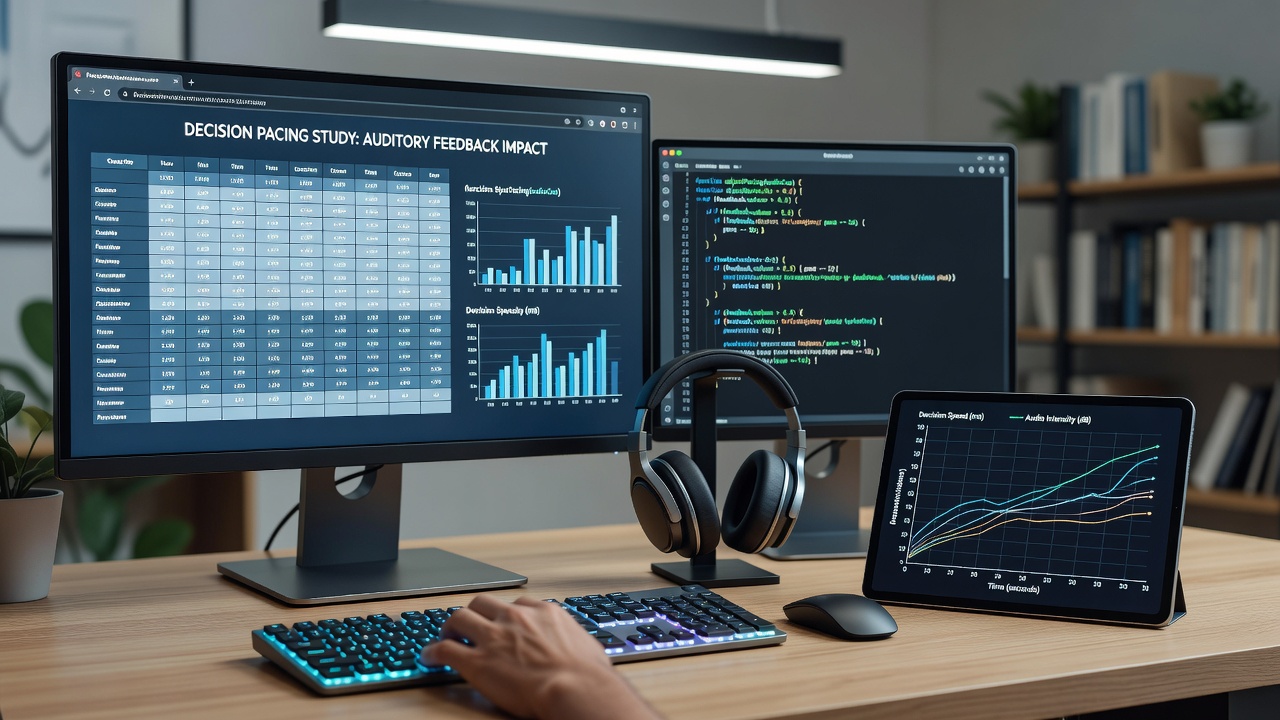
Developers implement auditory feedback through Web Audio API structures that allow precise control over oscillator frequencies, gain envelopes, and convolution reverb tailored to each simulation state. Analytics layers embedded in these platforms capture click-to-action intervals alongside corresponding audio events, generating datasets that reveal how particular sound parameters correlate with pacing adjustments. According to findings from the Technical University of Denmark, filtering high-frequency components from confirmation sounds extends average decision intervals by roughly 320 milliseconds across repeated trials.
Cross-platform testing protocols now standardize audio calibration for browser environments to account for variations in device speaker output and headphone usage. Data collected through these protocols indicate that users on mobile browsers respond more strongly to haptic-accompanied audio cues, while desktop sessions show greater sensitivity to stereo positioning alone. Regulatory guidance issued by the European Committee for Electrotechnical Standardization in early 2026 encourages consistent audio accessibility thresholds that preserve decision pacing benefits without introducing overload for users with auditory processing differences.
Cross-Interface Comparisons and Emerging Data Trends
Comparative analyses between table simulations and virtual event interfaces highlight shared reliance on anticipatory audio cues that prepare users for upcoming decision points. Table environments tend toward discrete, short-duration sounds tied to individual actions, whereas event interfaces often employ continuous or looping elements that establish overall tempo. Figures released by the Japan Electronics and Information Technology Industries Association in mid-2026 show that hybrid platforms blending both approaches achieve the most stable pacing distributions across diverse user cohorts.
Longitudinal tracking of session logs demonstrates that iterative sound design refinements produce compounding effects on decision consistency over multiple exposures. Platforms that log both audio exposure and behavioral metrics can identify when specific cue sets begin to lose effectiveness, prompting targeted updates rather than wholesale redesigns.
Conclusion
Auditory feedback mechanisms continue to evolve as integral components of browser-based table simulations and virtual event interfaces, with measurable impacts on how users regulate their decision pacing. Ongoing data collection from academic and industry sources supports further refinement of audio parameters to match varied interaction contexts. As platforms incorporate findings from July 2026 studies and subsequent reports, the alignment between sound design and user timing patterns is expected to grow more precise across these digital environments.