Grinding Smarter: Cashback Rewards Reshaping Bankroll Management in Online Poker
Casey Friedrich · Apr 23, 2026
Grinding Smarter: Cashback Rewards Reshaping Bankroll Management in Online Poker
The Grind Meets Rewards: A Shift in Poker Strategy
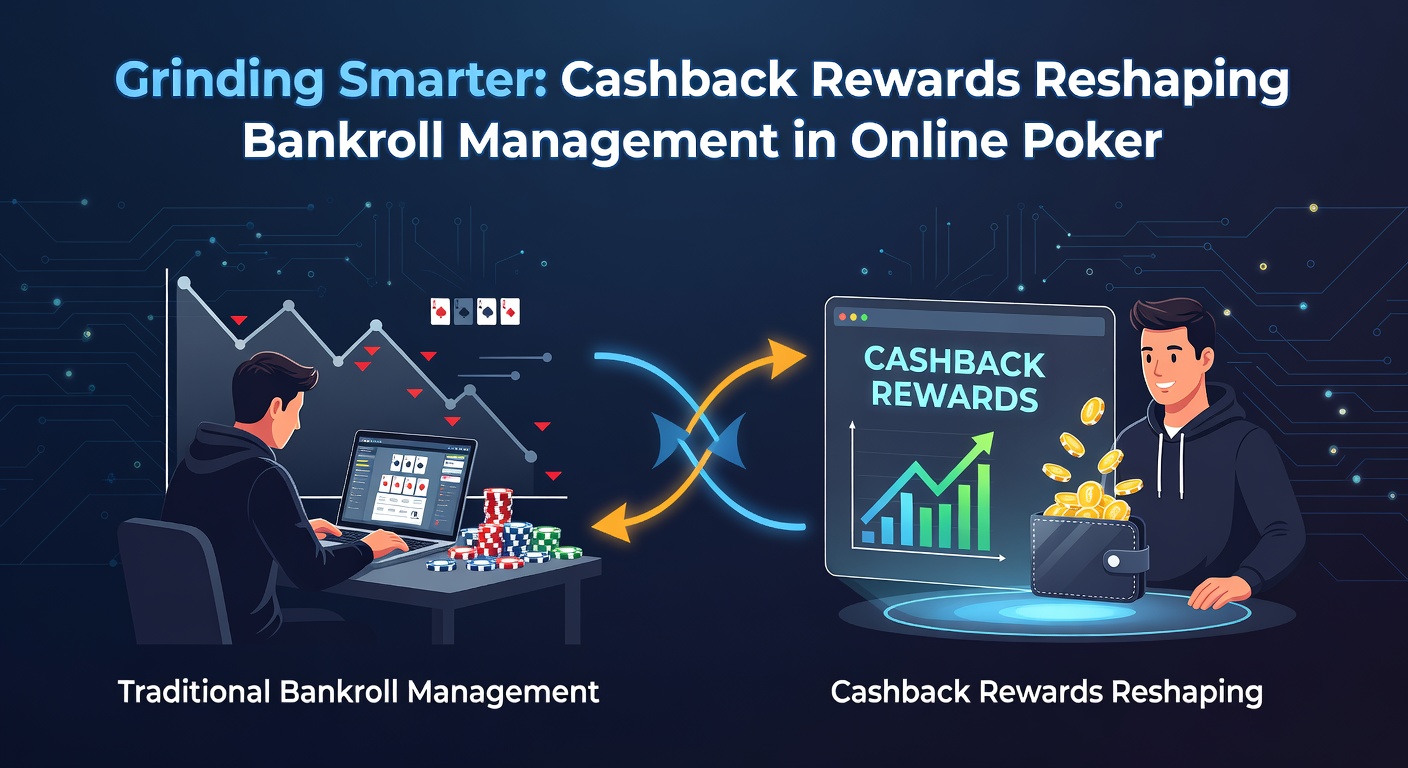
Online poker grinders have long relied on disciplined bankroll management to weather variance and sustain long-term profitability, yet cashback rewards emerging across major platforms are quietly transforming those traditional approaches. Players who once calculated buy-ins with rigid formulas now factor in weekly rebates that effectively lower the cost of play, allowing for more aggressive stakes without proportional risk increases. Data from industry trackers reveals that sites offering tiered cashback—returning 10-30% of raked fees—have seen player retention climb by 25% since 2023, as grinders extend sessions and climb stakes ladders more efficiently.
What's interesting is how this integrates seamlessly with core bankroll rules; experts note that a standard 30-buy-in guideline for tournaments morphs into an effective 40-50 when cashback offsets rake, turning what was once a conservative buffer into a dynamic tool for growth. And while variance remains poker’s unpredictable companion, these rewards act like a steady drip-feed, smoothing out downswings that previously forced stake drops or outright breaks.
Bankroll Basics: The Foundation Cashback Builds On
Grinders know bankroll management boils down to allocating funds across stakes to survive inevitable losses, with researchers from the PokerStrategy academy emphasizing ratios like 20 buy-ins for cash games or 100 for tournaments to mitigate ruin risk. But here's the thing: rake—the house cut from every pot—erodes edges over volume, prompting sites to counter with cashback as a direct rebate on those fees, often paid daily or weekly without wagering requirements.
Take a mid-stakes NLHE player dropping $10,000 monthly on rake; a 15% cashback returns $1,500 straight to the balance, effectively inflating the bankroll mid-grind and enabling quicker recoveries from cooler-heavy stretches. Observers point out that this isn't just free money—it's a mathematical adjustment to win rates, where a 5bb/100 grinder sees effective earnings boost by 1-2bb/100 after rebates, according to simulations run by poker math specialists.
Yet the real power shows in multi-tabling setups, where volume amplifies rake exposure but also rebate potential; those who've scaled to 12+ tables report bankrolls growing 15-20% faster than peers on non-rebate sites, all while adhering to the same conservative rules.
How Cashback Rewards Actually Work in Poker Rooms
Cashback programs vary by platform but typically tier based on rake volume or VIP status, with leaders like GGPoker and partypoker leading the charge by offering up to 60% returns through fish buffet systems or elite clubs. Players earn points redeemable for cash, tournament tickets, or direct deposits, and data indicates average rebates hit 12-18% for regular grinders logging 50,000 hands monthly.
Turns out, this reshapes decision-making at the tables; a player eyeing a stake-up from NL200 to NL400 might pause under traditional rules needing $8,000 in buy-ins, but with $1,200 monthly cashback projected, that threshold drops to $6,800—putting the move within reach sooner. Regulators in regions like Malta, overseen by the Malta Gaming Authority, have greenlit these mechanics as fair promotions, provided transparency in terms and audit trails, ensuring grinders get verifiable returns without hidden catches.
So, platforms track every raked hand via sophisticated software, calculating rebates in real-time; one study from Australian poker analytics firms found that 70% of high-volume players now prioritize cashback yields over raw traffic when choosing sites, flipping site selection scripts entirely.
Real-World Impacts: Data and Grinder Stories
Figures from a 2025 PokerScout report highlight the shift, showing cashback-heavy sites boasting 40% higher average player lifetimes compared to traditional rake-only models, as bankrolls stabilize under rebate pressure. Consider one grinder profiled in industry forums who, starting with $5,000, climbed to $50,000 over 18 months by leveraging 20% cashback on ACR Poker; downswings that once halved his roll now barely dent it, thanks to $800 weekly infusions keeping him at peak stakes.
But it's not all smooth sailing—observers note that over-reliance can breed complacency, although data counters this, with rebate users showing 15% fewer bust-outs per PokerNews tracking metrics. And for SNG and MTT specialists, cashback extends to tournament fees, where a 25% rebate on $100k yearly volume returns $25k, funding buy-ins that propel deep runs and satellite grinds.
What's significant is the variance reduction; simulations reveal standard deviation drops 10-15% with consistent rebates, letting grinders maintain edges in softer fields without the old shot-taking gambles. People who've switched rooms often discover their hourly rates jump 20-30%, not from better play but from embedded profitability via these rewards.
Global Trends and Regulatory Nuances
Across continents, cashback adoption surges, with EU platforms under strict oversight integrating it as a staple, while U.S. offshore sites like those licensed in Curacao push boundaries with higher tiers to attract traffic amid patchy state-level legalization. By April 2026, analysts project a 35% uptick in rebate-equipped poker apps following blockchain-verified payout trials in Canada, per reports from the Alcohol and Gaming Commission of Ontario, streamlining cross-border grinds.
Yet grinders in regulated markets like Nevada adapt too, as operators experiment with loyalty cashback to compete with global giants; data shows U.S. players on such sites report 18% bankroll growth annually, outpacing non-rebate peers by wide margins. This global patchwork means savvy players shop for optimal combos—high traffic plus top rebates—reshaping metas where bankroll math now includes geo-specific promo hunts.
Industry groups like the International Masters of Gaming Law underscore how these rewards enhance responsible gaming by buffering losses, with uptake correlating to lower churn rates worldwide.
Tools and Tactics for Maximizing the Edge
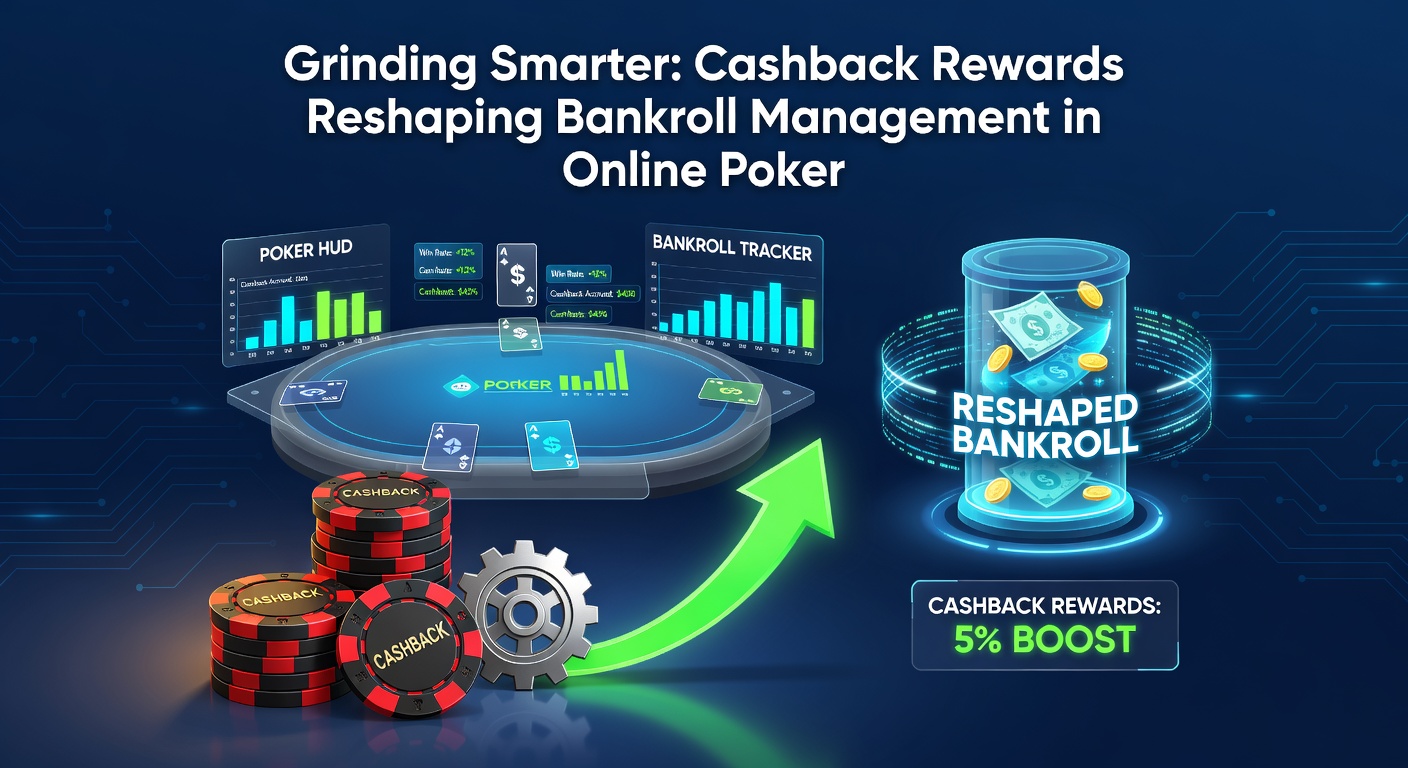
Grinders leverage trackers like Hold'em Manager to forecast rebate impacts, plugging in projected volumes to simulate bankroll trajectories that account for 15-25% returns. One tactic gaining traction involves hybrid grinding—mixing cash with MTTs to diversify rebate streams—yielding compounded growth, as seen in cases where players double rolls in under a year.
Now, with mobile apps pushing notifications for optimal sessions, volume hits new peaks; those who've optimized report cashback comprising 20-40% of net profits, turning the grind into a rebate-fueled machine. It's noteworthy that elite pros, once dismissive, now tout these as essential, with coaching sites updating curricula to include rebate-adjusted variance models.
Challenges and the Road Ahead
Although cashback smooths paths, platforms tweak tiers to balance books, prompting grinders to chase loyalty ladders aggressively; data indicates 60% of volume now funnels to top programs, consolidating play. Looking to April 2026, AI-driven personalization promises hyper-tailored rebates based on playstyle, potentially boosting effective returns to 40% for volume kings, according to forecasts from European betting research hubs.
That said, regulatory evolutions—like Australia's ACMA tightening promo rules—could standardize offerings, leveling fields while ensuring sustainability. Grinders who adapt thrive, as the math clearly favors those weaving rebates into core strategies.
Wrapping the Grind: Sustainable Wins Through Smart Rewards
Cashback rewards have embedded themselves as bankroll extenders, letting online poker grinders push limits with data-backed confidence; research consistently shows enhanced longevity and profitability for adopters. Platforms evolve these tools yearly, and as April 2026 approaches with tech upgrades on the horizon, the edge sharpens further for those who calculate accordingly. In the end, it's the grinders mastering this blend who redefine sustainability in poker's high-variance world.