Demographic Shifts in Digital Wagering Participation During Major International Sporting Events
Carlo Coleman · Jul 16, 2026
Demographic Shifts in Digital Wagering Participation During Major International Sporting Events
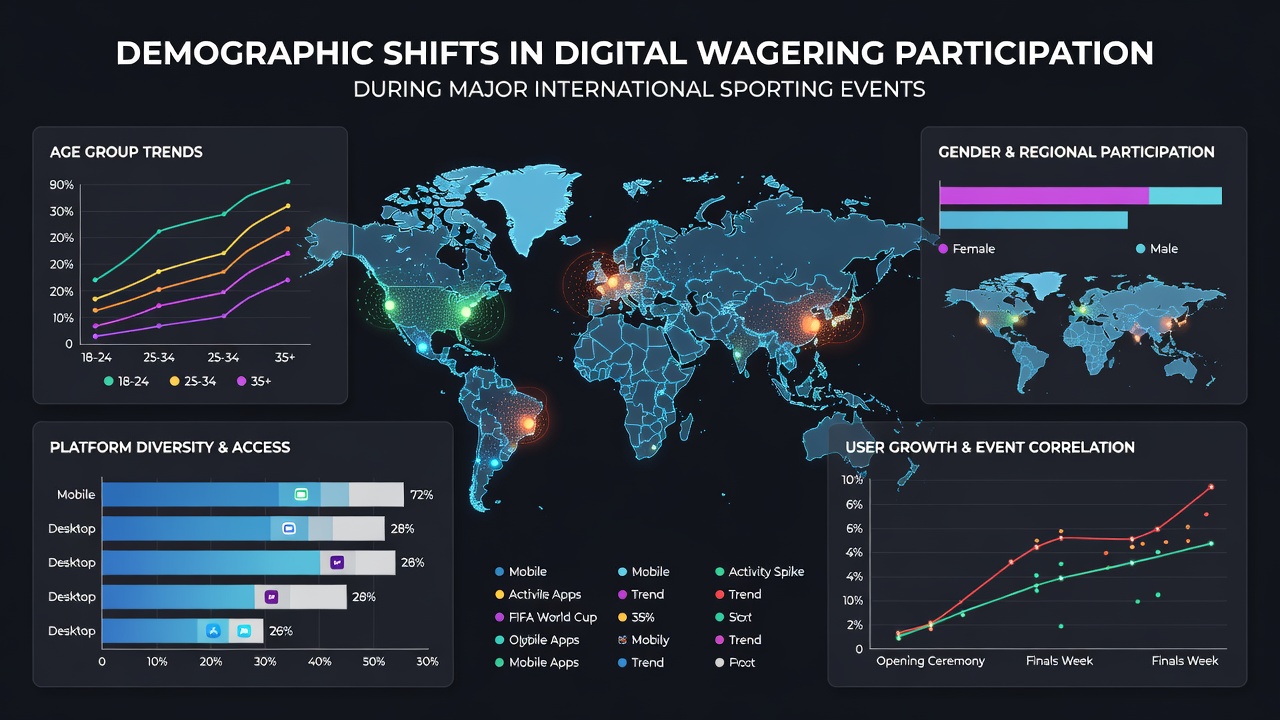
Participation in digital wagering platforms experiences notable changes when major international sporting events occur, and data collected across multiple regions reveals distinct patterns by age, gender, and geography. Researchers tracking user activity during events such as the FIFA World Cup, the Olympics, and continental tournaments have documented increases among younger adults while older cohorts maintain more consistent engagement levels throughout the year. These shifts coincide with heightened media coverage and mobile app usage spikes that platforms record in real time.
Age-Based Participation Patterns
Studies from regulatory bodies and market analysts indicate that individuals aged 18 to 34 represent the largest growth segment during these events. Figures from Canadian gaming oversight agencies show that this group accounts for over 60 percent of new accounts opened in the weeks leading up to the 2026 FIFA World Cup, with activity concentrated around match schedules in June and July 2026. In contrast, users over 55 demonstrate steadier but lower-volume participation that does not fluctuate as sharply with event calendars. Observers note that mobile-first interfaces and push notifications contribute to higher session frequency among younger demographics, while desktop access remains more common among older participants.
Gender Distribution Changes
Gender breakdowns also evolve during peak tournament periods. Pre-event baselines collected by European statistical services reveal male users comprising roughly 70 percent of active accounts, yet female participation rises by 15 to 20 percent during high-profile matches according to aggregated platform reports. This narrowing gap appears most pronounced in markets where live streaming integrations allow simultaneous viewing and wagering. Data from Australian government statistical collections further confirms that female engagement during the 2023 Rugby World Cup and subsequent events followed similar upward trajectories, suggesting the pattern repeats across different sports and regions.
Regional Variations in User Growth
Geographic differences emerge clearly when comparing North American, European, and Asia-Pacific markets. North American platforms report the steepest increases among urban users aged 25 to 39, whereas European data highlights stronger growth in Eastern member states where regulatory frameworks expanded recently. Asia-Pacific figures indicate rising participation from users in their early twenties, often tied to cricket and football tournaments that draw regional audiences. These variations align with local media consumption habits and the timing of events rather than uniform global trends.
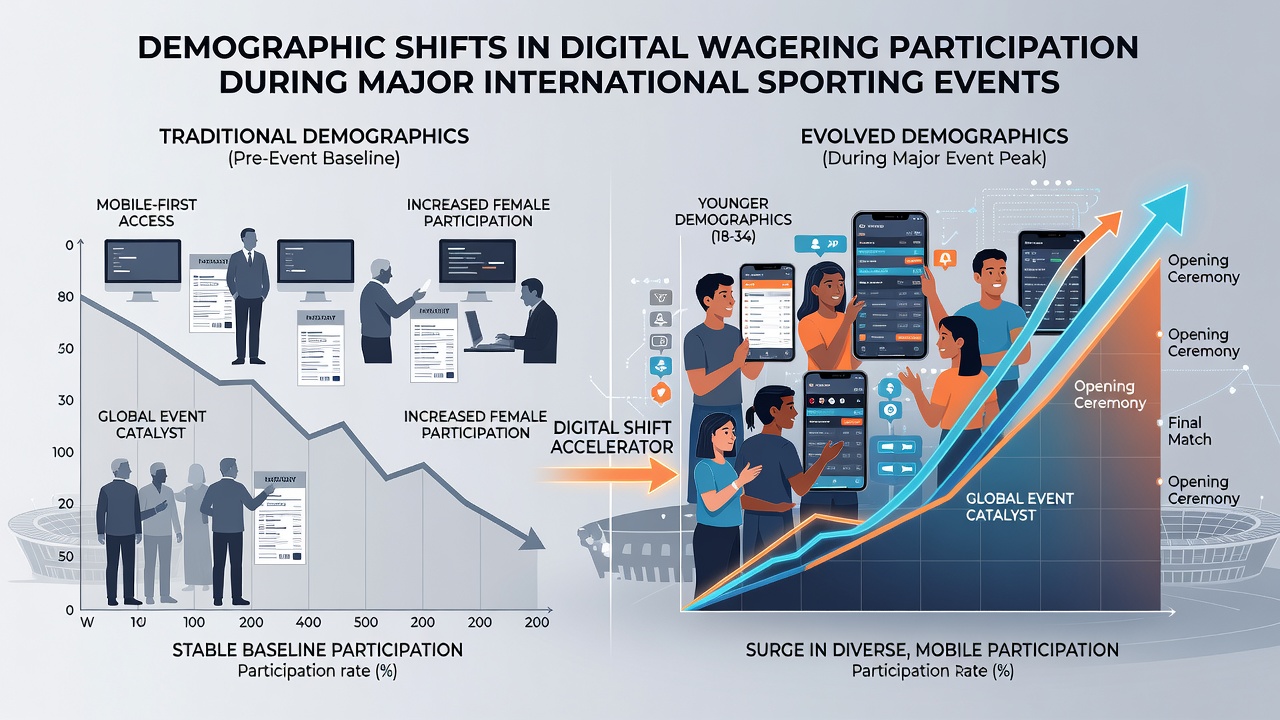
Payment method preferences shift alongside demographic changes. Younger cohorts increasingly select digital wallet options during event windows, while established users continue relying on traditional banking rails. Platform operators document these preferences through transaction logs that researchers cross-reference with age and location data to identify emerging segments. Such analysis helps explain why certain markets see accelerated adoption of new features precisely when major competitions are underway.
Event-Specific Engagement Metrics
Individual tournaments produce measurable differences in retention and frequency. The Olympics generate broader demographic spread because of the variety of sports involved, whereas single-sport events like the FIFA World Cup concentrate activity among football enthusiasts. Records from the first half of 2026 show elevated account verifications in July as the World Cup schedule intensifies, with verification rates among first-time users climbing notably in the 21 to 30 age bracket. Analysts attribute part of this increase to targeted promotional campaigns that coincide with match broadcasts.
Data Sources Informing Current Understanding
Comprehensive datasets compiled by Statistics Canada and the European Commission's gaming market reviews provide the foundation for these observations. Additional context comes from academic analyses conducted at universities in Australia that examine longitudinal user behavior across multiple tournament cycles. These sources collectively demonstrate that demographic shifts are recurring and predictable rather than isolated anomalies.
Conclusion
Demographic profiles in digital wagering continue to evolve in response to the calendar of major international sporting events, and the patterns observed through mid-2026 reinforce earlier findings from prior tournaments. Age and gender distributions adjust measurably during these windows, while regional differences persist based on regulatory environments and cultural preferences. Continued monitoring of transaction and account data will allow researchers to track whether these shifts stabilize or intensify with future competitions.